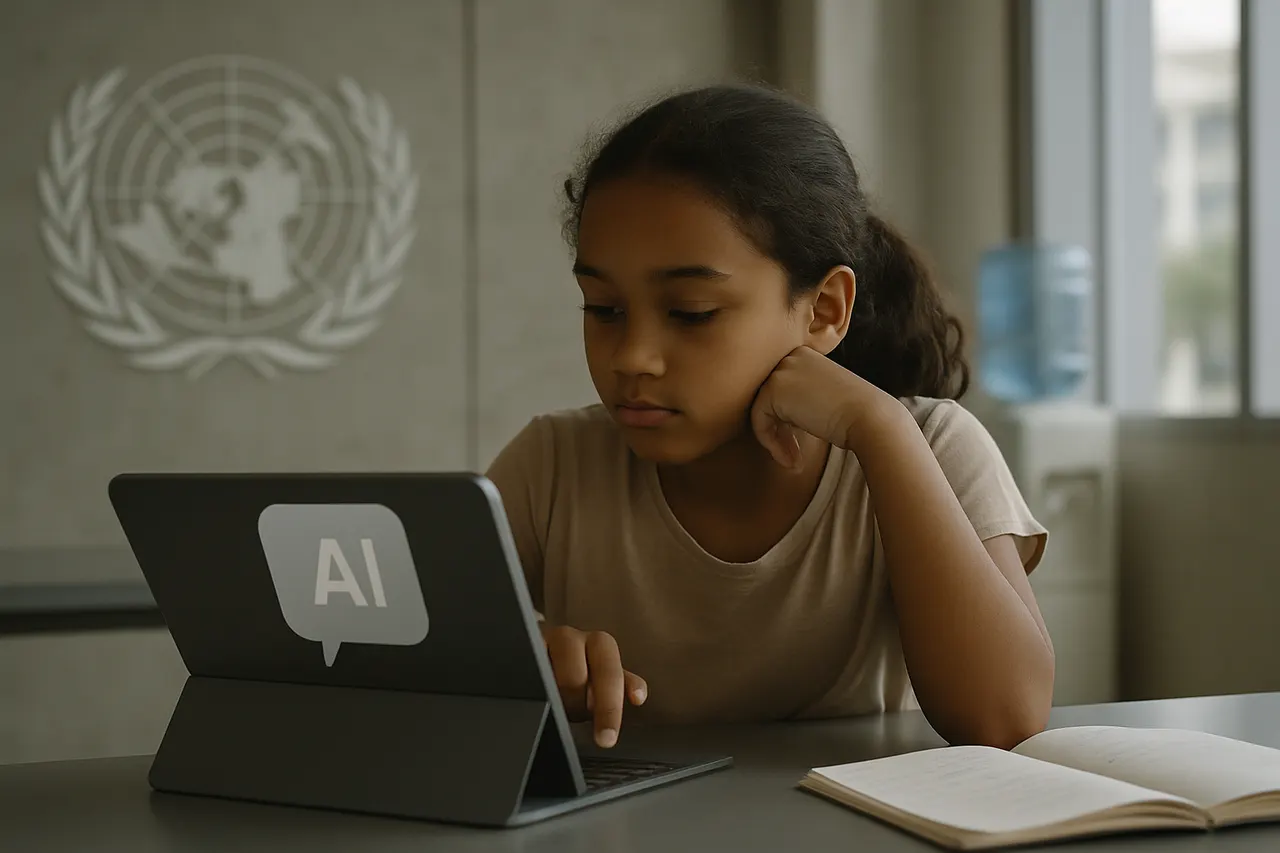
Millions of children globally are using artificial intelligence (AI) to assist with learning, problem-solving, and even seeking advice on personal concerns, according to new data from the UN Children’s Fund (UNICEF).
Based on research from 10 countries, UNICEF estimates that over 20 million children have used AI, with adoption rates among young people more than three times faster than adults. Approximately two million children—about one in ten—turn to AI for advice on issues that worry them, while 13 million use it to support their schoolwork and homework.
UNICEF highlighted that AI is "already shaping childhood around the world – for better and for worse," emphasizing that "a generation is growing up inside a global experiment."
Despite the opportunities AI offers for creativity and learning, UNICEF warned that evidence on its effects on children's development, emotional well-being, and exposure to harm is still emerging. Concerns include potential scams, misinformation, and the manipulation of images or videos into sexually explicit deepfakes, with one-third of surveyed children worried about scams or misinformation and one-quarter fearing deepfake exploitation.
The agency cautioned that children often face the consequences of poorly regulated AI systems without control over how the technology is designed or how their personal data is used. UNICEF called for stronger protections against AI-enabled sexual exploitation, increased investment in research on AI's impact on child development, safer and more transparent AI systems, improved digital literacy for children and parents, and expanded digital access to prevent a widening AI divide.
UNICEF stated, "The choices made about AI now will shape children's safety, privacy, well-being and their equal access to opportunities for decades to come."
Loading comments.