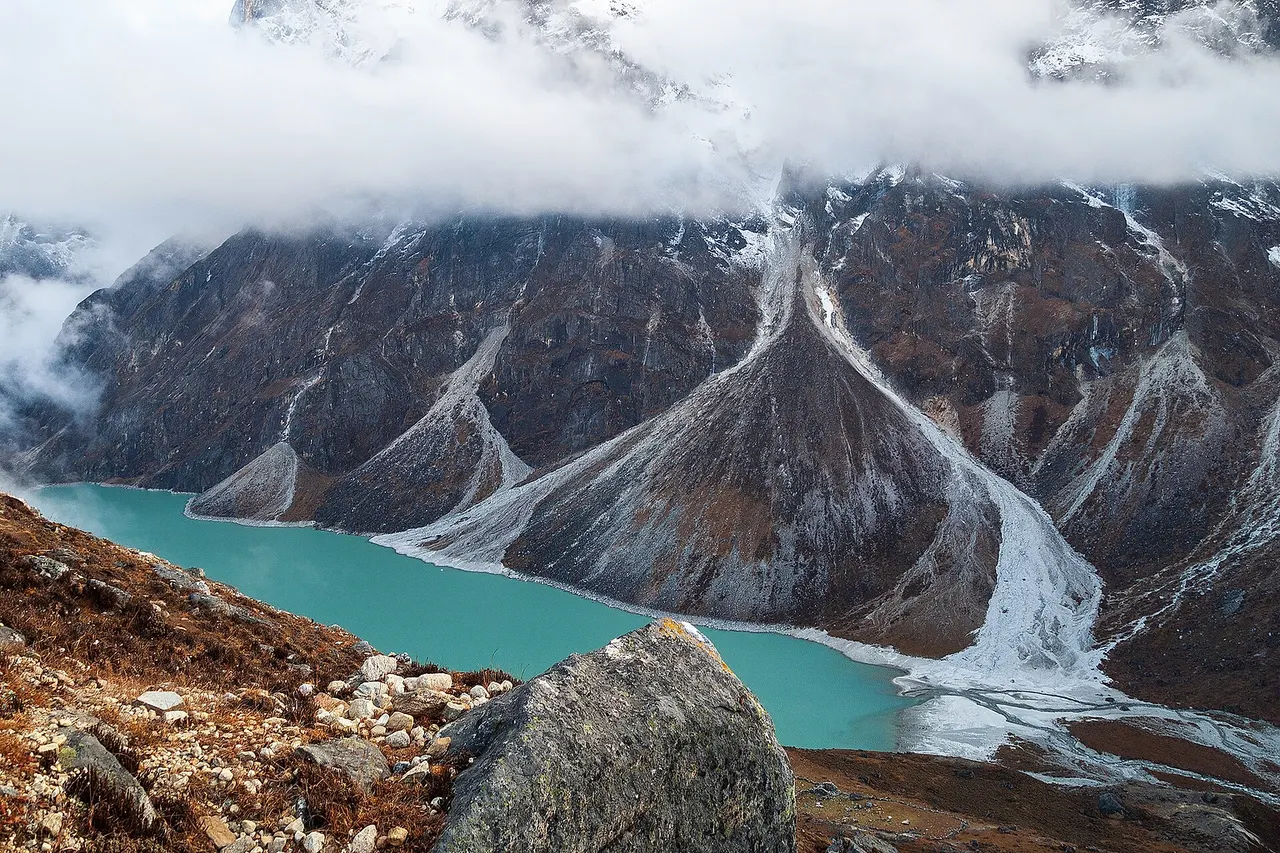

Catastrophic floods that struck Nepal and Tibet on Wednesday, August 26th, 2026, killing at least 273 people, were caused by a massive glacier collapse and debris flow that registered as a magnitude 5.2 landslide, according to the U.S. Geological Survey (USGS).
Initially, the USGS attributed the mudslides to a 4.4 magnitude earthquake but revised its analysis after reviewing data from seismic stations, long period seismic waves, and satellite imagery.
Climate experts at the Kathmandu-based International Centre for Integrated Mountain Development told The Associated Press that the flash floods were likely triggered by a glacial avalanche. They stated, "Hydrological observations indicate the exceptional speed and magnitude of the flood wave," noting that water levels on the Trishuli River rose by as much as 27 feet in just half an hour.
Rescue efforts are ongoing along the Nepal-China border, where more than 1,300 people remain missing. Nepalese officials report that dozens of bridges were destroyed and nearly 25 miles of roads damaged, complicating search and rescue operations.
The Nepalese army has rescued over 100 people from flood-affected areas by helicopter as of Thursday morning, August 27th. Approximately 1,200 people have been displaced from at least three villages. The village of Soley in Nuwakot, home to about 25 households, was nearly destroyed, according to Kathmandu-based journalist Nirajan Paudyal, whose family resides there.
The disaster has left communities struggling with the aftermath as authorities continue to search for survivors and assess the full extent of the damage.
Loading comments.