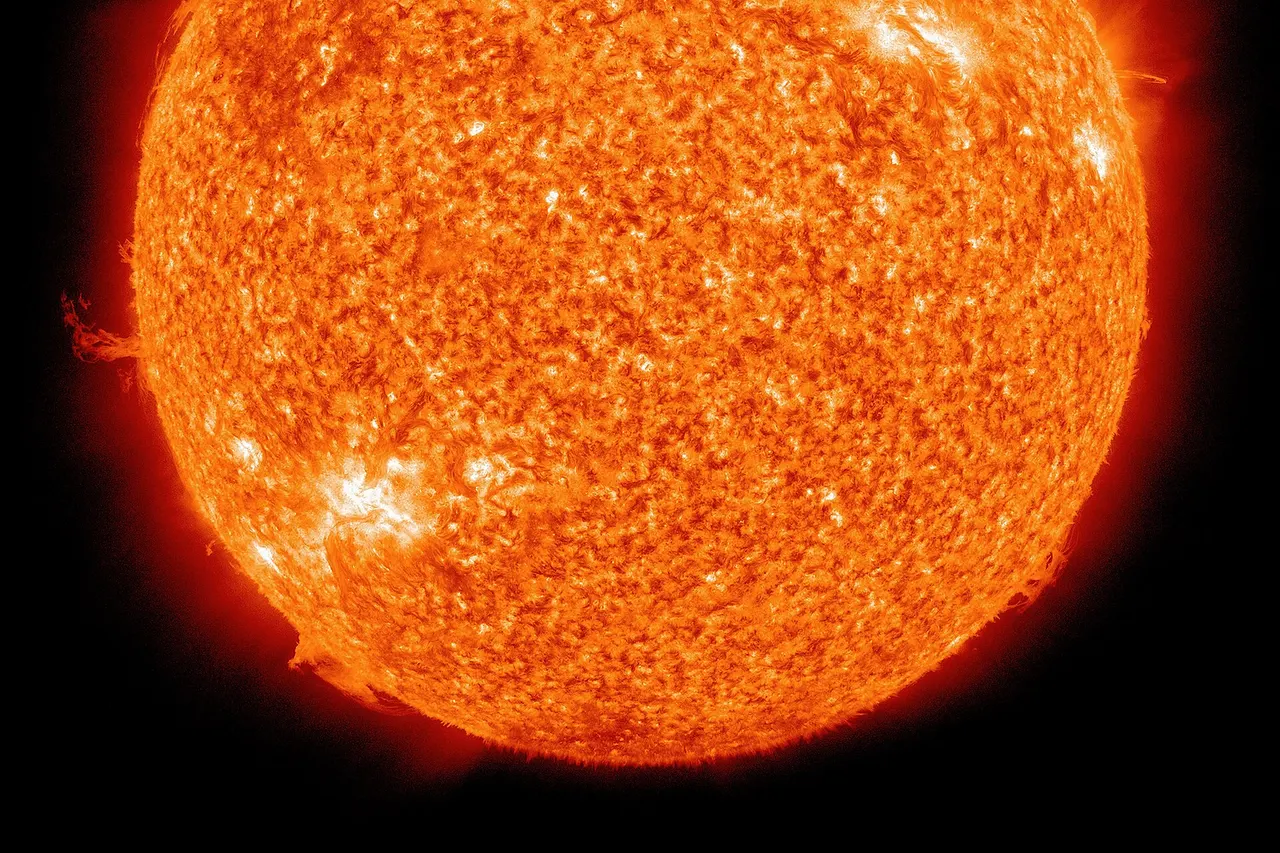

The Sun’s surface, a constantly churning expanse of hot, glowing plasma, has been captured in unprecedented detail by the world’s largest solar telescope. The imagery reveals a section approximately 5,000 by 3,500 kilometres in size — an area that could comfortably enclose mainland Australia on Earth.
This breakthrough was achieved by researchers using the Daniel Inouye Solar Telescope, named after the late US Senator from Hawaii. The images, described in the journal Nature, show swirling eddies on the Sun’s surface that play a significant role in its occasional violent outbursts but have been difficult to observe due to the star’s brightness.
Hannah Schunker, an astrophysicist at the University of Newcastle, explained that because the Sun is only about 149 million kilometres from Earth, it is the only star whose surface astronomers can study in such detail. She noted, "These very small-scale changes that are happening on the surface of the Sun, they are responsible for all the larger scale things happening in the atmosphere, and we've never been able to see them before."
Friedrich Woeger, senior scientist at the US National Solar Observatory and co-lead author of the study, said that while the preparation and analysis took months, the captured imagery spans only a few minutes. Michael Wheatland, an astrophysicist at the University of Sydney not involved in the research, described the images as "just incredible."
The detailed observations provide new insights into fundamental physics processes on the Sun, including how fluid motions move magnetic fields around, phenomena also seen in clouds and oceans on Earth. The Sun thus serves as a unique astrophysical laboratory for studying these dynamics.
Loading comments.