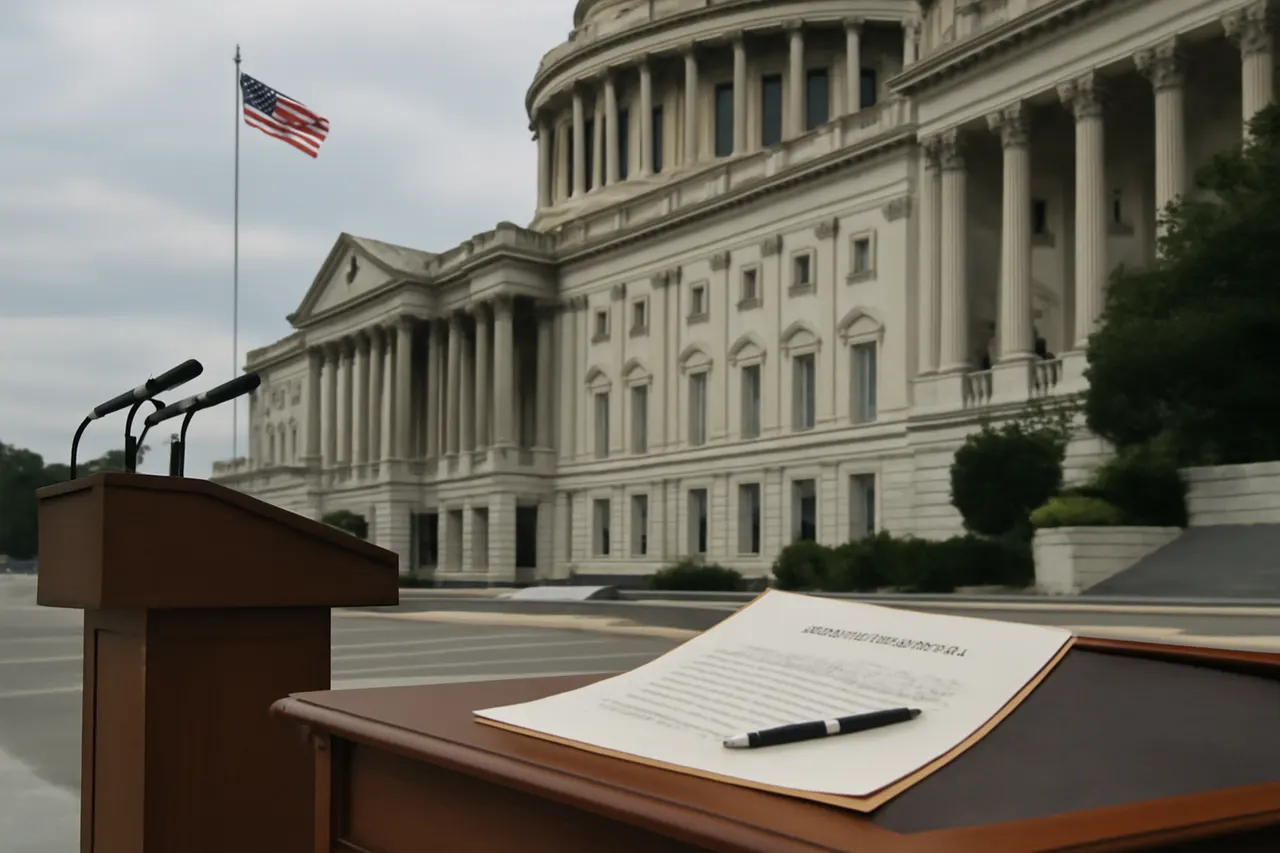
WASHINGTON — On Thursday, July 23, 2026, the U.S. House of Representatives passed a Democratic-led nonbinding proposal directing President Donald Trump to remove armed forces from hostilities in Iran. The measure passed 214-208, with four Republicans—Thomas Massie of Kentucky, Tom Barrett of Michigan, Warren Davidson of Ohio, and Brian Fitzpatrick of Pennsylvania—joining all Democrats in support.
Later that day, the Senate voted 47-49 to reject a joint resolution to end the Iran war. Unlike the House proposal, the Senate resolution would have had the force of law but was expected to face a presidential veto. Senators John Fetterman of Pennsylvania voted to advance the measure, while Republicans including Katie Britt of Alabama, Mitch McConnell of Kentucky, Lisa Murkowski of Alaska, and Rand Paul of Kentucky opposed it.
The votes were driven by Democrats aiming to hold Republicans accountable on the unpopular war ahead of the midterm elections and to reaffirm Congress's constitutional role in declaring war.
Several Senate Republicans have stated that the war should not continue beyond 60 days without congressional approval to comply with federal law. Senator Tillis explained that the 60-day clock began in July 2026, not in February when initial strikes were launched by Trump and Israel. “July 10, to my knowledge, is the first time I heard anyone in the administration refer to it as a war,” Tillis said, emphasizing the importance of congressional authorization once the 60 days expire.
Tillis also expressed a desire for the Strait of Hormuz to reopen promptly to lower gas and fertilizer prices but cautioned against allowing a foreign adversary to disrupt American supply chains, describing such actions as "acting radically."
Sources
- NBC Politics, "House votes to end Iran war, but Senate Republicans vote to let Trump continue waging it," Sahil Kapur, July 23, 2026: link
Loading comments.